Ethernet Switch Manufacturing & Quality Control Process | SZYMESH
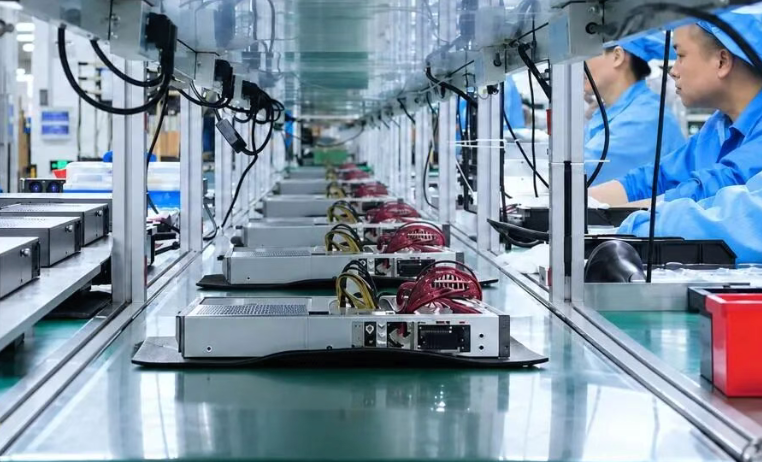
Inside the SZYMESH Ethernet Switch Manufacturing Process: From PCB Assembly to Quality Inspection
How are Ethernet switches manufactured, assembled, tested and inspected before delivery?
A finished Ethernet switch is the result of multiple manufacturing stages, including PCB processing, electronic component assembly, system integration, functional testing, quality inspection and packaging.
At the manufacturing site, production equipment, manufacturing processes and skilled operators work together to transform electronic components into circuit boards, and then integrate these boards with chassis, power supplies, fans and other components to build a complete network switch.
At SZYMESH, manufacturing and quality inspection are integrated into different stages of the production process. From material preparation and PCB assembly to system testing and final inspection, each stage plays a role in verifying product condition and preparing equipment for delivery.
In this article, we take a closer look at the Ethernet switch manufacturing process and how quality control is incorporated throughout production.
1. Material Preparation and Incoming Quality Inspection
Every Ethernet switch consists of multiple components, including printed circuit boards (PCBs), electronic components, chassis, power supplies, cooling fans and other hardware.
Before manufacturing begins, the SZYMESH production team reviews the product requirements and prepares the materials, equipment and production documentation required for the manufacturing process.
Based on product drawings, the Bill of Materials (BOM), applicable software versions and production instructions, personnel verify the required component models, specifications and quantities to ensure the materials are ready for subsequent PCB processing and assembly.
Before materials enter the production line, incoming quality inspection is conducted according to applicable requirements.
Depending on the type of material, inspection may include visual checks and relevant performance or specification verification. Electronic components are also handled and stored with attention to ESD protection, moisture control and environmental conditions, where applicable.
Material verification and incoming inspection help confirm the condition and suitability of materials before they enter the manufacturing process.
2. PCB Assembly: From Bare PCB to PCBA
The PCB is one of the core hardware components of an Ethernet switch. It carries key electronic components responsible for switching, processing, control and communication functions.
Transforming a bare PCB into a functional PCBA (Printed Circuit Board Assembly) involves several manufacturing steps, including solder paste printing, component placement, soldering and inspection.
Solder Paste Printing
The PCB first enters the solder paste printing process.
A printing machine applies solder paste to designated pads on the PCB according to the production requirements. Depending on the manufacturing process, SPI (Solder Paste Inspection) equipment may be used to inspect solder paste printing quality and identify potential issues such as insufficient solder paste, excessive solder paste or printing misalignment.
SMT Component Placement
After solder paste printing, SMT (Surface Mount Technology) placement machines position electronic components onto the PCB according to the programmed placement instructions.
Components may include the main processor, Ethernet switching ICs, memory chips, power management components and other electronic devices required by the switch design.
Automated placement helps ensure component positioning accuracy and production consistency.
Reflow Soldering
The PCB then passes through a reflow soldering process, where controlled temperature profiles melt the solder paste and establish solder connections between the components and PCB pads.
The reflow process is carried out according to the applicable production parameters and requirements.
AOI and Additional Inspection
After soldering, AOI (Automated Optical Inspection) may be used to inspect component placement and visible soldering conditions.
Depending on the PCB design and manufacturing requirements, X-Ray inspection may also be performed to examine solder joints that are not easily visible through conventional optical inspection.
For certain PCB designs, additional through-hole component insertion and soldering processes may be required.
Following these manufacturing steps, the bare PCB becomes a PCBA, ready for subsequent inspection and testing.
PCBA Functional Testing and Verification
After PCB assembly, the production team conducts initial functional testing and troubleshooting to verify the board’s basic operating condition.
Quality personnel may also perform visual inspection and functional sampling checks according to the applicable inspection requirements.
Any identified issues are handled through the relevant production and quality control procedures before the PCBA proceeds to complete switch assembly.
PCB assembly quality is an important foundation for the performance, stability and reliability of the finished Ethernet switch.
3. Switch Assembly: Integrating PCBAs into a Complete Ethernet Switch
Once the PCBA has completed the required processing and inspection, it is ready for integration into the complete Ethernet switch.
At the assembly workstation, production personnel install the PCB assembly into the chassis according to the product structure and assembly instructions.
Depending on the switch model and configuration, the assembly process may include:
- PCBA installation
- Chassis assembly
- Power supply installation
- Cooling fan installation
- Internal cable connection
- Connector and interface alignment
- Hardware assembly and fastening
As the components are integrated, the switch gradually takes its complete hardware form.
During assembly, production and quality personnel check assembly conditions and product appearance at relevant stages, paying attention to component installation, structural alignment and assembly consistency.
Depending on the product configuration and delivery requirements, the switch may also undergo software or firmware loading, system initialization and basic configuration.
After hardware assembly and configuration, the equipment proceeds to the system testing and final inspection stage.
4. Ethernet Switch Functional Testing and Final Quality Inspection
Before an Ethernet switch is approved for packaging and warehouse storage, it must undergo applicable functional testing and final inspection.
Testing personnel use designated test equipment and testing procedures to verify the operating condition of the complete device and confirm that relevant functions meet the applicable product specifications and testing requirements.
Depending on the switch model, testing items may include:
- Device power-on and boot-up verification
- Ethernet port communication testing
- Data forwarding functionality
- Network interface verification
- Device management functionality
- Software or firmware version verification
- Other model-specific functional tests
During final quality inspection, inspectors also check the product’s physical condition, interfaces, indicator lights, chassis assembly and other relevant items.
Software and firmware versions are checked against applicable requirements to help ensure the device is prepared for the intended configuration and delivery.
If an abnormality is identified during testing or inspection, the product is handled according to the applicable procedures, and additional verification or retesting is performed as required.
Production Test Management and Traceability
Production test procedures may be integrated with production control systems.
Barcode identification, work orders and related production information can be used to manage product status and support production process tracking and traceability.
These processes help maintain visibility over manufacturing and testing activities and support the management of product status throughout production.
Functional testing and final inspection help verify the condition of the finished Ethernet switch before it enters the packaging and delivery stage.
5. Packaging and Warehouse Preparation
After the applicable functional tests and final inspections have been completed, the Ethernet switch proceeds to packaging.
Packaging personnel clean and protect the equipment according to packaging requirements, prepare the required accessories and documentation, and complete packaging and product labeling.
Depending on the product and customer requirements, packaging may include protective materials, accessories, power cables, mounting hardware and other specified items.
After packaging is completed, the products undergo the relevant warehouse procedures and are prepared for storage and subsequent shipment.
Packaging and labeling are also important parts of the delivery process, helping ensure that products are appropriately prepared for transportation and customer receipt.
6. From Manufacturing to Customer Deployment
Manufacturing an Ethernet switch involves multiple interconnected processes, from PCB assembly and hardware integration to functional testing, quality inspection and packaging.
Quality checks and testing throughout production help the manufacturing team identify and address issues at different stages and verify product condition before warehouse storage and shipment.
For network equipment buyers, understanding the manufacturing and quality control process provides additional insight into how switches are produced, inspected and prepared for delivery.
At SZYMESH, we believe manufacturing transparency and process management are important parts of delivering network equipment to customers.
Whether you are sourcing Ethernet switches for enterprise networks, system integration projects, ISP deployments, telecom infrastructure or distribution, understanding the manufacturing process can help you make more informed purchasing decisions.
Looking for Ethernet switches for your networking projects or distribution business?
Contact SZYMESH to discuss your Ethernet switch requirements, product specifications and sourcing needs.
SZYMESH | Networking & AI Infrastructure Solutions
Website: https://www.szymesh.com
SZYMESH Ethernet switch PCB SMT component placement during manufacturing
AOI inspection of Ethernet switch PCB assembly during production
Ethernet switch PCBA assembly during network switch manufacturing
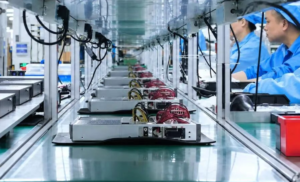
Ethernet switch chassis and PCB hardware integration at the manufacturing workstation
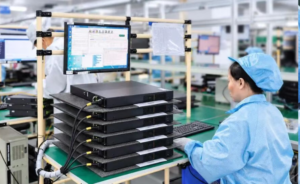
Functional testing of Ethernet switch ports and device operation